Make Chores Easier to Start With a Clear First Action
Make chores easier to start by choosing one visible first action, placing its needed tool nearby, and deciding what counts as a useful start.
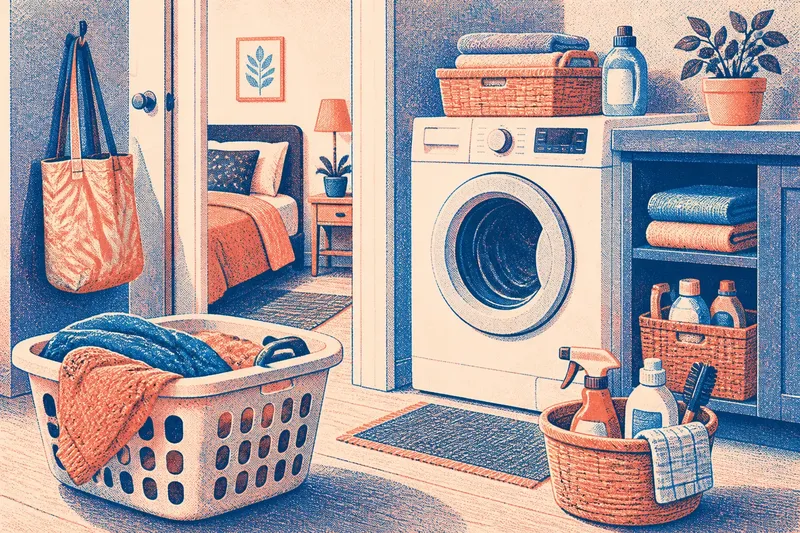
Make chores easier to start by naming the first action, not by promising yourself you will finish the whole job. For laundry, “carry the hamper to the washer” gives you a concrete move; “deal with laundry” leaves several decisions waiting.
A specific action reduces the choices at the beginning
A household chore often combines separate jobs. Cleaning the bathroom might mean clearing the counter, gathering supplies, wiping the sink, and putting everything away. When you think of all of that as one task, even choosing where to begin can feel like work.
Write or say the opening action as a verb and an object: “put the dishes in the sink,” “bring the recycling bin to the door,” or “open the cleaning caddy.” It should describe one thing you can see happen. If the wording includes several actions joined together, narrow it until the first move is clear.
This approach is not a promise that you will complete the chore. It makes the start easier to identify. After that action, you can decide whether to continue, pause, or change the plan.
Put the cue where the chore actually starts
A cue is a visible reminder connected to an action. Place it where you are likely to encounter the task. If shoes gather by the entryway, keep the shoe basket there. If mail lands on the kitchen counter, put a tray within reach so the envelopes have an obvious destination.
The cue can be an item you need, such as a dish towel set beside the sink before drying dishes. It can also be the location itself: a laundry basket beside the bedroom door makes gathering clothes a visible first move. Keep the signal easy to recognize. A reminder that needs explanation can create another decision instead of removing one.
One well-placed object is often enough. Leaving every cleaning supply on the counter or adding several notes is not worth the effort if the actual snag is simply that the cloth is stored elsewhere.
Choose an opening move that connects to the task
The first action should make the chore more ready to continue, not send you on a side trip. “Think about cleaning the refrigerator” is hard to observe. “Move the old container from the front shelf to the compost bin” is specific and changes what is in front of you.
For meal preparation, setting out a cutting board and knife can be a useful start if chopping is next. For watering plants, filling the watering can directly prepares you to water. Choose a move that avoids a large planning decision while still pointing toward the work.
Say you have a clean-clothes pile on a chair and a laundry basket in the hallway. You choose “carry the basket to the bedroom” as the first action. You carry it in, set it beside the pile, and then decide whether to fold, hang, or put away the clothes. The visible result is a basket beside the clothes; the tradeoff is that the clothes remain unsorted until you choose another action.
Decide what counts as a complete start
A stopping point keeps the first action from quietly expanding into a much larger job. For “put the plates in the sink,” the action is complete when the plates are there. For “bring the broom to the hallway,” it is complete when the broom is ready at that spot.
Afterward, make a fresh decision. If you have time and want to continue, choose the next action. If not, pause without treating the opening move as a failed attempt. Separating the start from the finish makes it easier to judge what is actually manageable in the moment.
It is not worth designing a color-coded chart, timer system, and stack of reminder notes for a chore that only needs a nearby basket. Add a tool only when it addresses a specific obstacle you keep meeting.
What questions help you choose a starting action?
How can you tell whether an action is specific enough?
It names one observable action, such as “wipe the dining table,” rather than a broad goal like “clean up.” You should be able to tell when it is done without interpreting a vague instruction.
Does the first action need to be the easiest part?
No. It should be easy enough to begin and directly connected to the chore. Putting the laundry basket beside the washer can open the task; sorting an unrelated drawer is more likely to become a detour.
What should you change if the same start keeps stalling?
Notice the obstacle: supplies may be in another room, the task may combine several chores, or the action may depend on another person. Move the needed item closer, define a narrower task, or choose a part you can do independently.
How can people in a shared home use the same cue?
Agree on one plain action and put its cue where everyone can see it. “Put the bin beside the back door” gives housemates a shared instruction that does not depend on who wrote a note or what they meant.
Adjust the start when the household changes
If you keep pausing before the first move, identify the exact point of friction. If the cleaning cloth is stored upstairs, bring it to the room where it is needed. If “clean the kitchen” feels too broad, choose one part, such as clearing the counter. If the task depends on a housemate, select an opening action you can complete alone or agree on who handles the shared step.
For a recurring chore, connect the action to a cue that already occurs. After breakfast, you might carry your dishes to the sink; when you take off your coat, you might hang it on the hook. A cue that naturally appears in the routine is easier to notice than a new reminder you have to remember.
When furniture, storage, or household roles change, update the wording too. “Take the basket to the washer” stops being useful if the basket now lives beside the washer. The best first step for a chore is the one that fits its current location and makes the next decision easier to see.
To make chores easier to start, choose one action, place its cue where the task begins, and decide what completion looks like. That small bit of clarity can leave you with a useful next choice, whether you continue now or return to the chore later.